Spinach Lab Follow-up
Dear Students,
I hope you all had fun learning about chromatography this week! It was great to see everyone successfully separate spinach pigments using column chromatography.
Some of you had trouble achieving good separation on the TLC plates. Please don't worry: we will not be grading based on your Rf values or how well your pigments separated.
Instead, I want you to focus on understanding the theory behind chromatography:
What are intermolecular interactions?
How does solvent polarity affect separation?
What are the mobile and stationary phases?
If your TLC results weren’t ideal, explain why in your lab report. That analysis is just as important as getting a perfect result. If you didn’t get good separation, I’ve attached:
A photo of a well-separated TLC plate with a reference table of spinach pigments with their names, polarity order, and expected colors on TLC plates.


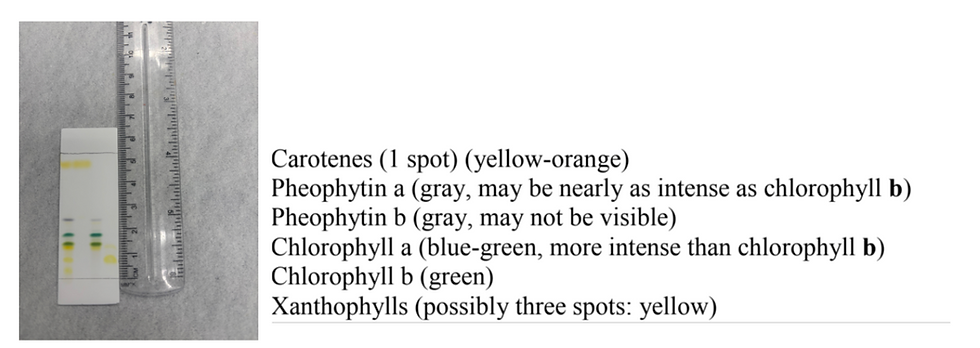
You may notice I didn’t mention pheophytin a and b in the lab handout. That’s because, with the solvent ratio and column size we used, it’s difficult to separate these gray pigments. Pheophytin is a degradation product of chlorophyll, where the central magnesium ion has been replaced by two hydrogen atoms.


Comments